
Lok Sabha will consider a motion to remove Justice Yashwant Varma due to a suspected corruption case, after a similar motion in Rajya Sabha was not admitted. The move follows a unanimous decision by political parties to address perceived corruption in the judiciary.

The Supreme Court is examining the extent to which courts can intervene when governors delay or refuse to act on bills passed by state assemblies. The court questioned the Centre on whether judicial review is barred in cases of gubernatorial inaction, sparking debate on the balance of power between states and the central government.

'He is the same man who has won honours for the country across the world.'

The government rejected the Opposition's demand for a discussion on electoral roll revision in Bihar, citing that the matter is sub judice and pending before the judiciary.

Opposition candidate B Sudershan Reddy appeals to MPs to vote with conscience in the upcoming vice presidential polls, urging them to prioritize the spirit of India and parliamentary traditions over party loyalty.
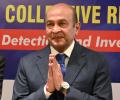
Lok Sabha Speaker Om Birla admitted a notice for the removal of High Court judge Justice Yashwant Varma and constituted a three-member committee to probe charges against him.
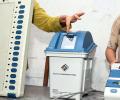
EVMs can't be used in presidential, vice-presidential, or Rajya Sabha polls because they only count simple votes, not the preference-based system needed for these elections.

The National Sports Governance Bill has become an Act after President Droupadi Murmu gave her assent to the landmark legislation that promises to revamp India's sports administration.

The GenZ violence that engulfed Nepal is not only against nepo-babies -- its anger is broader and riddled with contradictions, making it difficult for interim PM Sushila Karki, points out Aditi Phadnis.

When the government chooses to either ignore or use identity documents only when it suits them, it shakes people's sense of stability, notes Shyam G Menon.

Rijiju also hit out at Congress leader Rahul Gandhi, saying that his own party MPs "get uncomfortable" when he speaks in Parliament and are apprehensive that he will do "anap-shanap baatein" and the party will have to bear the consequences.

The Supreme Court dismissed Allahabad High Court judge Yashwant Varma's plea seeking invalidation of a report that found him guilty of misconduct in the cash discovery row.
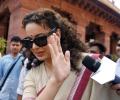
The Supreme Court told actor and BJP MP Kangana Ranaut that she had "added spice" to a retweet during the 2020-21 farmers' protest, leading her to withdraw her plea for quashing a defamation complaint.
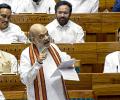
'This type of comprehensive legislation has never been introduced before in Parliament's history.' 'A bill that simultaneously affects ministers, chief ministers, and the prime minister represents completely uncharted Constitutional territory.' 'Throughout our nation's legislative history, the established policy has consistently held that public office holders should face punishment only after receiving conviction from a competent court of law. Without this safeguard, we risk systematic destabilisation, and our federal structure would face complete collapse.' 'Any central government could potentially deploy this legislation against state governments they oppose politically. This represents the most frightening prospect and dangerous possibility that these bills create.'
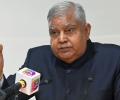
Former Vice-President Jagdeep Dhankhar has moved to a private farmhouse in Delhi after resigning from his post. He will stay there until he is allocated an official residence.
Officials aware of the procedure to appoint and remove Supreme Court and high court judges pointed out that while defending his case before lawmakers in any of the House, Justice Varma can announce that he is quitting and his verbal statement will be considered as his resignation.
High court judge Yashwant Varma has denied before the SC-appointed inquiry panel his involvement in the discovery of huge cache of burnt currency notes from a storeroom in his official residence. A fire broke out at the judge's official bungalow at 30 Tughlak Crescent on the night of March 14, leading the cash discovery.
Government sources on Tuesday said Parliamentary Affairs Minister Kiren Rijiju has begun consultations as part of efforts to get leaders of different parties on board for the impeachment motion against Varma following his indictment by a three-member probe committee constituted by the Supreme Court.
When the government chooses to either ignore or use identity documents only when it suits them, it shakes people's sense of stability, notes Shyam G Menon.

The Supreme Court has upheld the deletion of the 'waqf by user' provision in the amended waqf law, stating it is not arbitrary and addresses potential misuse.

Lok Sabha Speaker Om Birla is likely to announce the formation of an inquiry committee to probe the charges against Allahabad High Court Judge Yashwant Varma. A notice signed by 152 MPs was submitted to Birla on July 21.
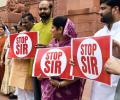
The Supreme Court has warned that it will set aside the special intensive revision (SIR) of electoral rolls in Bihar if any illegality is found. The court is reviewing the validity of the Bihar SIR and its potential impact on a similar exercise across India.

A two-judge bench of the top court had on August 11 directed authorities in Delhi-National Capital Region (NCR) to start picking up stray dogs from all localities "at the earliest" and relocate the animals to dog shelters.
Stepping up the heat on Justice Yashwant Varma, parliamentarians on Monday submitted notices to the presiding officers of the Lok Sabha and the Rajya Sabha for the removal of the Allahabad high court judge from whose residence in New Delhi burnt wads of currency notes were found.
The Supreme Court is scheduled to hear on Monday Allahabad high court judge Yashwant Varma's plea seeking invalidation of a report by an in-house inquiry panel which found him guilty of misconduct in the cash discovery row.
'Karur could still impact Jana Nayagan's box-office success if Vijay and the TVK do not get their act together,' points out N Sathiya Moorthy.

A profile of veteran Nepali politician K P Sharma Oli, detailing his rise to power, his various stints as prime minister, and his impact on Nepal's political landscape.
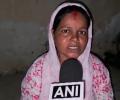
A 35-year-old woman in Bihar, India, was mistakenly listed as 124 years old in draft electoral rolls, sparking a political demonstration and raising questions about the accuracy of voter registration.

'The quality of justice is directly linked to the quality of judges -- if that suffers, justice delivery suffers.'
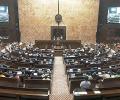
The Waqf (Amendment) Bill, 2025 was passed in the Lok Sabha early Thursday, with 288 members supporting it and 232 against it.

Salient features of the National Sports Governance Bill that promise to overhaul several aspects of sports governance and the grievance redressal system for athletes and administrators alike in the country.
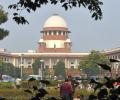
The Supreme Court questioned Justice Yashwant Varma's conduct regarding an in-house inquiry panel report that found him guilty of misconduct in a cash discovery row. The court raised concerns about his delayed challenge to the inquiry and the implications of the panel's recommendations.
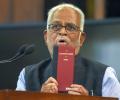
'Earlier, we used to talk about a deficit economy. There is a deficit in democracy' 'If you read superficially Gandhi and Ambedkar and Nehru, some misconceptions and misunderstanding come to mind, as if they were at loggerheads and they differed radically in their views' 'India is one nation. There is only one citizenship. No citizenship for South India and no citizenship for North India and another for the Northeast'
The Supreme Court questioned Justice Yashwant Varma regarding his plea to invalidate an in-house inquiry panel report that indicted him after a large amount of burnt cash was discovered at his official residence during his time as a Delhi High Court judge.

The Supreme Court has extended the stay on trial court proceedings against Congress MP Shashi Tharoor in a defamation case filed over his 'scorpion on Shivling' remark. The court questioned the complainant's sensitivity and adjourned the matter for further hearing.

Patel emphasised that one of the most important features of the bill is the establishment of a dedicated tribunal for resolving disputes, reducing the burden on the judiciary and ensuring quicker justice.

Several opposition MPs, who had previously criticized former Rajya Sabha chairman Jagdeep Dhankhar, are now praising him following his sudden resignation, with some even requesting him to reconsider.

'Dialogue and discussion, not conflict, are the way forward.' 'Internal fighting strengthens our enemies and provides material to divide us.'

Sports Minister Mansukh Mandaviya said the Sports Bill is a key reform aimed at building a "transparent, accountable and world-class sports ecosystem" in India.
The Union government is considering an impeachment motion against Allahabad High Court judge Yashwant Varma, who was indicted by a Supreme Court-appointed probe panel after burnt cash was found at his residence. The government is likely to consult with opposition parties before moving forward with the motion, which would require a two-thirds majority vote in Parliament.
 © 2026 Rediff.com - Advertise with us - Disclaimer - Privacy Policy - Sitemap - Feedback - About us - Terms of use - Grievances